
Opposition MPs from the INDIA bloc, including prominent leaders like Rahul Gandhi and Priyanka Gandhi Vadra, marched to the Supreme Court to file a petition against Chief Election Commissioner Gyanesh Kumar, alleging 'vote chori' and irregularities in electoral rolls.

The Supreme Court has emphasised that the expert committee tasked with defining the Aravalli hills and ranges must consult domain experts and other stakeholders to ensure public input is heard.
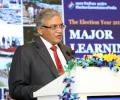
A petition has been filed in the Supreme Court challenging Chief Election Commissioner Gyanesh Kumar over alleged statutory duty violations and the controversial deletion of 13 crore voters during the Special Intensive Revision of electoral rolls, claiming decisions were made without the concurrence of other election commissioners.

Senior Trinamool Congress leader Kalyan Banerjee has commented on the Supreme Court judgment regarding the Special Intensive Revision (SIR) of electoral rolls, emphasising its specific application to the Bihar case and highlighting the Election Commission's limited authority in determining citizenship.

The Supreme Court-appointed High Powered Enquiry Committee (HPEC) will hold a sitting on October 29 to hear affected persons and record evidence regarding alleged violence, including pellet gun use and harassment of female protesters, during the July Jantar Mantar protests. The five-member panel, chaired by Justice R Subhash Reddy, was formed after petitions alleged police excesses and counter-allegations of violence against police. An online portal is also available for submissions.

A nationwide survey by a Supreme Court-appointed panel reveals that 15% of higher education students felt overwhelmed or distressed, and 9% experienced suicidal thoughts in the past six months. The findings, part of an upcoming report, highlight deep-rooted social discrimination, academic pressures, and inadequate counselling services contributing to mental health concerns and rising student suicides in Indian Higher Educational Institutions.

A panel of retired Supreme Court and High Court judges, part of an Independent Commission on Special Intensive Revision (SIR), held a public hearing on Thursday to address widespread deletions from India's electoral rolls. Testimonies from affected citizens, including a former MP and a Delhi resident declared deceased by the Election Commission, highlighted significant issues. The SIR process, initiated in 2025, has led to the removal of approximately 13 crore voters nationwide, with substantial deletions reported in Delhi and Uttar Pradesh.

The Supreme Court has rejected a High-Powered Committee's request for a six-month extension to submit its report on the definition and protection of the Aravalli Hills, directing the panel to submit it by November 30. The court warned of reconstituting the committee if it fails to meet the deadline and emphasised the need for issue-specific interim reports. This decision follows a previous controversy over the Aravalli definition and mining regulations.

The Supreme Court has rejected pleas to reconstitute a high-powered committee investigating alleged police excesses against student protesters in Delhi, stating that the allegations against the panel were based on conjecture. The court emphasised the committee's role in ensuring fairness and transparency, and directed it to proceed with its inquiry into various issues including the use of pellet guns, targeted violence, and property destruction, while ensuring protection and confidentiality for vulnerable witnesses.
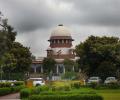
The Joint Parliamentary Committee (JPC) on simultaneous elections had scheduled an "informal interaction" with Supreme Court judges, which was later cancelled by the apex court. The Supreme Court deemed the meeting inappropriate as the proposed constitutional amendment could become subject to judicial review. JPC Chairman PP Chaudhary defended the panel's initial decision, citing precedents, while DMK MP P Wilson, who mooted the idea, expressed disappointment and argued against the notion that such interactions violate separation of powers.
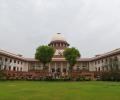
The Supreme Court clarified on Monday that it had not adjudicated on the new Form 6, used for inclusion in electoral rolls, during its hearing on the Special Intensive Revision (SIR) of electoral rolls in Bihar. This clarification comes after the Election Commission's press release suggested the apex court had upheld the Form 6 declaration.

Former Supreme Court judge Justice Rohinton Fali Nariman has voiced serious concerns regarding the Election Commission's functioning, stating that the right to vote is 'at great peril'. He called for the Supreme Court's intervention to address 'disturbing developments' within the poll panel, particularly citing issues like voter disenfranchisement during electoral roll revisions and the controversial appointment process of Election Commissioners.

The Supreme Court has affirmed its decision not to alter the five-member high-powered committee, led by former Justice R Subhash Reddy, which is investigating allegations of police excesses against student protesters and violence against police personnel in Delhi. The court dismissed concerns about potential bias, stating the committee acts as its "extended hand" and will function under its supervision. It also noted the suspension of an executive magistrate who issued a show-cause notice to a student involved in protests.
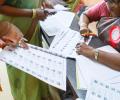
The Supreme Court will hear a plea on October 28 regarding the Special Intensive Revision (SIR) of Delhi's electoral roll. Petitioners seek transparency from the Election Commission on voter deletion reasons and a simplified re-inclusion process for those omitted, especially concerning Form 6. The court had previously raised concerns about "mechanical" notice issuance during the SIR, which led to 47 lakh voter deletions in Delhi.

Former Bombay High Court judge Justice R C Chavan has resigned from the Maharashtra government's Uniform Civil Code panel, citing profound concerns.

The Supreme Court has sought responses from the Election Commission and Chief Election Commissioner Gyanesh Kumar regarding a plea filed by Congress leader Rahul Gandhi and 12 other opposition leaders concerning alleged large-scale voter deletions and Special Intensive Revision (SIR) irregularities.
A curative petition has been filed in the Supreme Court challenging the September 23 split verdict on the Chief Election Commissioner and Other Election Commissioners (Appointment, Conditions of Service and Term of Office) Act, 2023. The petition, filed by Jaya Thakur, alleges a "reasonable apprehension of bias" due to claims that Justice Satish Chandra Sharma's son is a standing counsel for the Election Commission, raising questions about judicial propriety.

The court made it clear that it has not accepted the report and sought the opinion of the counsel for both Zahira and Setalavad in regard to 'acceptability' of the report.

The Supreme Court has agreed to examine a plea seeking the recall of its recent split verdict regarding the 2023 law on the appointment of the Chief Election Commissioner and Election Commissioners. This law notably excludes the Chief Justice of India from the selection panel, a change from a previous Supreme Court directive.

'Having analysed the break up of the hospital billing structure the committee believes that rationalising of room charges needs to be done on an emergent basis.'

A panel set up by Lok Sabha Speaker to probe allegations of discovery of cash at the official premises of Justice Yashwant Varma has concluded that the charges of unexplained cash, disturbing evidence and evasive explanation against him "are proved".

Chief Justice of India Surya Kant has stated that the ongoing protests against Chief Election Commissioner Gyanesh Kumar and the associated restrictions in Delhi fall under law and order, not his judicial purview, and declined to meet opposition leaders regarding the issue.

The Supreme Court has decided to form a high-powered committee, including retired judges and former top police officials, to investigate allegations of police excesses against student protesters in Delhi. The committee will examine video evidence and complaints, particularly from female protesters, and the court may quash FIRs against students without grave criminal antecedents, upholding the right to peaceful protest.
The Election Commission has informed the Supreme Court that over 37 lakh appeals concerning deletions or inclusions in West Bengal's electoral rolls remain pending under the Special Intensive Revision. The apex court-appointed tribunals have disposed of only a fraction of the 38.20 lakh appeals filed, prompting the Supreme Court to seek data and a plan for streamlining the adjudication process.

The Supreme Court has directed the Election Commission to resolve the contentious dispute between the rival factions of the All India Trinamool Congress over its party name and crucial 'flowers and grass' election symbol within three months of the completion of pleadings.
The Supreme Court has indicated that its judges may personally visit the National Testing Agency (NTA) to examine its upgraded facilities aimed at preventing recurring NEET paper leaks. This unusual move underscores the court's emphasis on institutional strengthening and permanent solutions. The NTA informed the bench that it has overhauled its system, while a high-powered panel is also working on structural reforms to ensure foolproof examination processes.

The Supreme Court stated it has not approved any modifications to Form 6, used for electoral roll inclusion, during the Special Intensive Revision. This observation came during the hearing of a Public Interest Litigation (PIL) challenging alleged unilateral decisions by the Chief Election Commissioner regarding changes to Form 6 and electoral roll revisions in states like Goa and West Bengal, without the concurrence of his colleagues. The court issued notice on the plea, highlighting concerns over collective decision-making within the Election Commission.
'If the intention was simply to replicate what's already been done elsewhere, there was no need for a committee at all -- there's already an Act passed there (in Uttarakhand); just copy it, paste it, and you're done. Why waste everyone's time convening a panel for that?'

Chief Election Commissioner Gyanesh Kumar is facing significant scrutiny after an investigation revealed objections from his fellow election commissioners, Sukhbir Singh Sandhu and Vivek Joshi, regarding decisions made during the Special Intensive Revision of voter lists. The objections, reportedly made at least 14 times, concerned issues like changes to voter registration forms and centralised control over electoral roll databases, intensifying criticism of Kumar's tenure and the EC's impartiality.
A Supreme Court bench of Justices Dipankar Datta and Satish Chandra Sharma has given split opinions on whether pleas challenging the 2023 law for appointing the Chief Election Commissioner and Election Commissioners should be referred to a larger Constitution bench, citing a difference in views on the law's constitutional validity and the executive's role in selections.

The task force's move to directly solicit views from students, parents and teachers marks a parallel effort to bring education stakeholders into the reform process.

Congress leader Rahul Gandhi urged CEC Gyanesh Kumar to resign and turn approver, stating the opposition's fight is against the "bigger powers" behind him.

Professor Subha Shankar Sarkar has resigned as the head of a five-member committee investigating alleged ABVP vandalism at Jadavpur University, citing his inability to conduct an effective inquiry, prompting the university to seek a new chairperson.

The Supreme Court is set to hear a plea filed by Congress leader Rahul Gandhi and other opposition figures on Thursday regarding alleged large-scale voter deletions and irregularities in the Special Intensive Revision of electoral rolls. The petition seeks an independent audit of these deletions and modifications, and a direction to prevent further deletions without due process.

The Supreme Court is set to hear pleas challenging Chief Election Commissioner Gyanesh Kumar's alleged unilateral decisions without the concurrence of other election commissioners. The petitions seek his suspension and question actions like altering voter registration forms and handling electoral roll revisions in Goa and West Bengal, highlighting concerns over the multi-member character of the Election Commission.
The article details a history of internal disagreements among Election Commissioners in India, highlighting instances from 1993 to the present, including clashes between CECs and commissioners over various issues like removal recommendations, dissent notes, and affidavits, culminating in recent objections regarding voter list revisions.

The Supreme Court has issued notices to the Election Commission and the Centre regarding pleas alleging that the poll body made several decisions without the approval of the two election commissioners. The court stated it would annul any decisions found not to be in accordance with the law, while also refusing an interim order to restrain CEC Gyanesh Kumar from making decisions.

The Supreme Court has established a five-member high-powered committee, led by former top court judge Justice R Subhash Reddy, to investigate allegations of police excesses against student protesters and violence against police personnel during recent demonstrations in Delhi.

The Supreme Court has stated it will consider the recommendations of the Nandan Nilekani-led task force regarding the online conduct of the NEET examination, emphasising the need for additional safeguards in cybersecurity and database protection. This follows the cancellation of the NEET-UG exam due to an alleged paper leak and subsequent re-test.

The Supreme Court has questioned the Election Commission's decision to allot the Shiv Sena's bow-and-arrow symbol to the Eknath Shinde faction, asking if the possibility of denying the symbol to both factions was adequately considered. The court also raised concerns about using legislative majority as a test while disqualification proceedings against MLAs were pending. The Shinde faction argued for the validity of the legislative majority test, citing significant vote share and legal precedents.
